
Johns Hopkins researchers take green approach to reducing, re-using and recycling data
Johns Hopkins University researchers are thinking green about how to speed up computers and make them last longer.
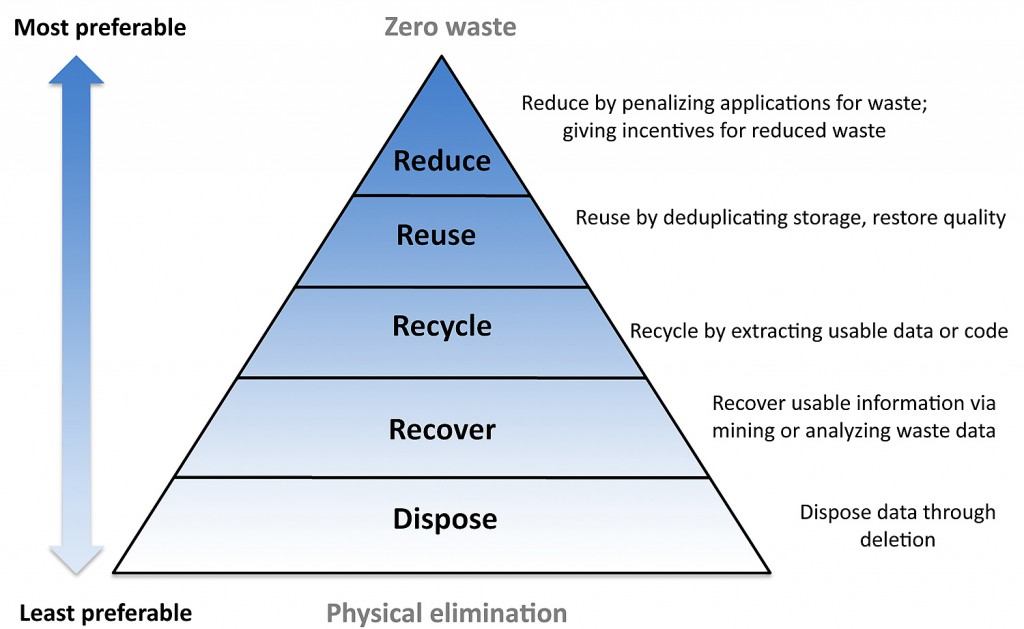
Ragib Hasan (who remains affiliated with Johns Hopkins but recently took a job with the University of Alabama at Birmingham) and Randal Burns have published a paper (The Life and Death of Unwanted Bits: Toward Proactive Waste Data Management in Digital Ecosystems) that includes the pyramid shown above illustrating their solutions to digital waste problems. Waste data on computers includes unintentional scraps, used data, degraded data and generally unwanted data, they say.
“In everyday life, ‘waste’ is something we don’t need or don’t want or can’t use anymore, so we look for ways to re-use it, recycle it or get rid of it,” said Hasan, an adjunct assistant professor of computer science, in a statement. “We decided to apply the same concepts to the waste data that builds up inside of our computers and storage devices.
RELATED: New bill would ban some US e-waste exports
The researchers acknowledge that computer users have relaxed about cleaning out their computers given that you can get a lot more storage capacity for a lot less money these days. What’s more, the cloud promises virtually unlimited storage. However, they warn that individuals hard drives do run out of space and that technologies like Flash-based systems can have their lifespans shortened by frequent erasing of files.
What would be a better way to keep computers clear of excess waste involves urging software vendors to design cleaner programs in the first place – and coming up with a way for computers to enforce programs to limit waste, say by running them more slowly if they don’t comply.
The Johns Hopkins research was supported through National Science Foundation funding.
Waste more time by following our Alpha Doggs Facebook page





