* Convergence and VoIP at work at UCSF Medical Center
Editor’s Note: We’d like to let you know that starting Nov. 6, this newsletter will be renamed Network World’s Convergence & VoIP Newsletter. The name change will better reflect the focus of this newsletter, which we hope you will continue to enjoy. Thanks for reading.
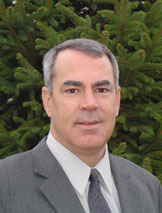
Over the last few weeks, we’ve heard from several key infrastructure and service suppliers about convergence and VoIP trends that they have identified. This week, we’ll hear from David Sproul, manager of emerging technologies and capital projects at the University of California, San Francisco Medical Center. UCSF Medical Center is recognized throughout the world as one of the leading healthcare institutions, known for innovative medicine, advanced technology and quality care. According to Sproul, everything at UCSF is aimed at providing the best possible health care for its patients — and that includes deploying the most effective communications technology.
Watching convergence and VoIP evolve over the last six or seven years, Sproul and his team realized that a converged network and VoIP were important to meet their users’ requirements. His objective was to be “cutting edge but not bleeding edge.” According to Sproul, the “evolution didn’t happen overnight,” but he felt the time and technology were both right to make changes.
The medical center recently moved to an IP convergence solution supplied by Siemens. The medical center has deployed a variety of Siemens equipment at its facilities, including five HiPath 4000 Real-Time IP Systems. The HiPath 4000, an IP convergence platform is built over a distributed architecture, and the system enables voice and data on a single network using fixed lines, packet broadcast or a mixture of both.
Along with the move to VoIP, the center also shifted from 50 T-1s between sites to four T-1s, with an AT&T GigaMAN service providing the converged backbone. The center has saved more than $400,000 just on the T-1 costs alone. And in the case of a new facility installation, the Siemens distributed node system and IP-PBX have reduced capital expenditures for an additional 200 users from a typical pre-IP cost of between $250,000 and $350,000 to post-IP cost of $96,000.
Sproul notes that once the center started with the right technology, it began to see added business benefits by using VoIP. Another savings has been realized by providing users with a Siemens soft client for VoIP on a user’s computer. Sproul says, “Its phenomenal – no trouble with security or with voice quality; next month we’re making it available to physicians. With only one device to maintain [the computer], it saves us $200 for each desktop phone.”
Next time, we’ll continue with our VoIP success story at the UCSF including some special needs that are especially important to a medical center.