"We’ll touch 90% of our systems and their applications over the next three to five years, modernizing them, replacing them, retiring technical debt, and introducing features"
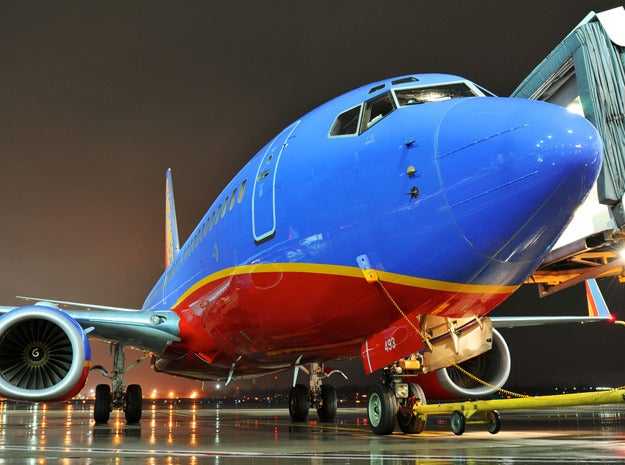
Craig Maccubbin is CTO of Southwest Airlines, which is already the largest domestic airline in the U.S. and still growing rapidly. He has 500 employees in his technology operations organization, out of about 1,000 employees in technology overall, and he reports to the CIO along with peers in operations, commercial, enterprise management and product solutions. Network World Editor in Chief John Dix recently caught up with Maccubbin to learn about technology management in this high pressure environment.
What do your duties as Chief Technology Officer entail?
I am essentially responsible for the operation of our technology. That includes all of our infrastructure services, which we define exactly as you would think: networking, compute, storage, end user computing, disaster recovery, environment management, etc. And I’m responsible for application maintenance services, so all the work we do to support applications from an L2 and L3 perspective, and for service management, the classic ITSM definition of how we handle incidents and problems. I also have responsibility for the quality management organization — that’s application and infrastructure quality — and lastly, responsibility for information security, which is an important task anywhere, but especially important at Southwest because we’re an airline and because we have such good brand recognition.
Give us a thumbnail of your tech environment.
I’ll describe it in two ways. One is our current state and one is a state we’re planning as part of a larger business and technology transformation, which we can dive deeper on.
Regarding our current state, we operate two data centers that are somewhat standardized. There is a high degree of complexity in the airline industry because the coordination of the planes and fueling them and getting passengers to and fro and provisioning and all the other work that goes into operating an airline. By its nature it is just more complex than the average business. And it is all the more complex for us because we’re the largest domestic carrier in the United States. We carry more passengers and have more flight segments in the United States than Delta or American or United. Those airlines are, of course, larger, but that’s because of their international routes.
++Also see:How TD Ameritrade’s Chief Data Officer is driving change++
We fly to and operate out of about 100 airports, so we have a large WAN and infrastructure in those locations to operate ticket counters, gate positions, below-wing maintenance facilities, cargo operations, provisioning operations, warehouse operations, etc.
Because of the size and scale of our business, there are a lot of airline industry solutions that simply don’t work for us. We’ve run into those limits over the years and ended up with a higher degree of software and systems that we built for ourselves, and that’s created some added complexity.
Sounds overwhelming. I imagine you have a range of tech suppliers.
We do have a number of important technology partnerships. We have forged relationships with Cisco, HP, Dell, IBM, Teradata, and many others. In addition, we have important partnerships with Amadeus and Sabre for our reservation systems.
Ok. Coming back around to business and technology transformation. What is that about?
The transformation story is actually very compelling at Southwest. Over the last five years we’ve set some important strategic goals for us as a company.
In July we began operating internationally for the first time ever, serving places in the Caribbean and Central America. That is an important growth driver for us.
We also had the Wright Amendment lift, which required any aircraft leaving from Love Field in the Dallas area to connect to another place in Texas or a state touching Texas before it could fly anywhere else. That lifted in October of 2014 and radically changed the way we fly our airline.
We just recently completed the AirTran integration, so in three years we successfully merged the two companies and the employee groups and pilots and flight attendants in a very people-focused way, which is something that you would expect from Southwest and our culture. We’ve modernized our fleet by bringing in the 737-800. And we launched the all-new Rapid Rewards program, which was very important.
All those programs were highly successful. We delivered on time, delivered the business value we anticipated, and in many instances delivered business value beyond what we anticipated and planned for. So we’ve gone through this transformation and changed our business, and as we look forward to what’s coming next, our two main areas of focus will be increasing our operational reliability, and offering a very hospitality-focused experience for customers.
To get there we have to change the way we deliver our services and technology to be more nimble, and that means reassessing how we do what we do, and transforming the technology itself. We’ll touch 90% of our systems and their applications over the next three to five years, modernizing them, replacing them, retiring technical debt, and introducing features and capabilities that allow us to be a more nimble provider of business value through technology.
Because when we think about the strategic goals we have around operational reliability and a hospitable customer experience, there are technology components at the absolute center of all those goals. That’s why we’re changing what we do and how we do it, as well as changing the underlying technology upon which the business relies.
Will cloud play a role in this transformation?
Today we operate our own data centers, we use cloud partners and we use hosting partners. And moving forward you’ll see a shift of where we locate applications and the infrastructure for those applications getting more flexible. The idea is to serve applications from the right location, with flexibility for provisioning, and the ability to match availability requirements to the application purpose.
And of course security guides what we’re doing. We’re a Tier 1 PCI merchant, with the bulk of our revenue coming from credit card transactions, and the bulk of that coming in from our website. So security is guiding principle for us, and we’re building out a security infrastructure that enables applications to live in the right location.
So for the applications we’re building today, we are evaluating where they should go. And the applications that lived in the old paradigm, the question is, what is the right location? And if they should be moved, when is the right time to move them and what is the right transition period? We are planning their future state on a system-by-system, application-by-application, component-by-component basis. But since we’re touching all these systems, all these applications over the next several years, we have the opportunity to make that transition in the right way.
Are you already heavily virtualized or is that part of the transformation?
We are already 85% virtualized, so we’re in a really good position for that because we have the ability to move things to where they need to be. But when we talk about transforming those applications, it is more than just moving them around. To us transformation is materially doing something different to get materially different results. We want to modernize. That might mean moving from something we built to something that’s commercial off-the-shelf, or moving something we built on older technology to something we base on our new architectural standards.
You mentioned reevaluating “how we do what we do.” That implies some organizational shifts as well. What do you see there?
We created the Business Transformation Solutions (BTS) organization which is designed to interface with our business partners in operations, enterprise management and the commercial organizations, and they’re focused on driving business value through enabling technologies. They shape demand, drive process improvement, and investment prioritization.
That was part of our organizational transformation, consolidating all of our older vertically-integrated application teams which are very much siloed, doing their own things with their own processes and their own tools in their own ways. We want to corral that into a product solutions organization with a standard set of methodologies, a standard set of tools.
And there are other organizational changes, but it’s really about changing the way we work. Making sure that once this BTS organization is stood up they are armed with the right capabilities and partnerships with folks in the business so they make us successful as a technology organization.
There’s been a lot of discussion today about Software Defined Networking. Has that cropped up with you guys yet?
I think we’re probably in the same position a lot of companies are in, trying to figure out what SDN changes.
But it is absolutely on our radar screen, and when the offerings become more mature, we’ll look at what partners bring to the table with regard to SDN. I believe that’s how SDN will start to be introduced at Southwest. We’ll be looking to put applications where they belong in those different environments, and as those environments mature and add support for SDN, we’ll be able to take advantage of those new capabilities.