Friends of Creative Strategies’ Tim Bajarin nominated 82 people for the Tech Mount Rushmore

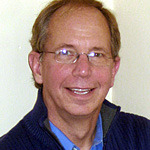
Tim Bajarin asked his friends to name the top contributors to the tech industry—people who should be on a Tech Mount Rushmore if one were to be built. Who is Bajarin? He is the president of Creative Strategies, an analyst, and a futurist located in Silicon Valley where he has followed technology for almost four decades.
People such as financial analyst Mark Stahlman, long-time tech editor Joel Dreyfuss, and investor Roger McNamee—all with almost the same four decades of experience covering the tech industry in their separate fields—cast their votes. The 30 or 40 individuals that contributed the nominations are all experienced people in the tech sector, though fairly heavily weighted towards digital technology.
The names came from a Facebook conversation (shared only with Bajarin’s friends) on Bajarin’s Facebook page. The names were ranked based on the number of times individuals proposed them. The first three positions on Tech’s Mount Rushmore were uncontested. The fourth position was a five-way tie.
First place will not surprise anyone. Steve Jobs is the tech industry’s George Washington. The second position (Nikoli Tesla) and third position (Martin Cooper) were an unexpected surprise, though. Few people will know who they are without searching Google.
Tech’s Mount Rushmore
 Matthew Yohe, CC BY-SA 3.0
 Steve Jobs
1. Steve Jobs, co-founder and twice CEO of Apple Computer, is best remembered for returning to Apple and leading the company back from the brink of financial disaster when Microsoft’s Bill Gates lent Apple $100 million in 1997, as well as for the invention of the iPhone.
Jobs was known for his mercurial management style, his product design skills and his ability to sell a consumer product with his reality distortion field.
 GS200 – Taken by friend on a rooftop on October 2007 Previously published: Twitter @MartyMobile, CC BY-SA 3.0
 Martin Cooper
2. Martin Cooper led a team of engineers in the early 1970s to design, build and bring to market the first wireless cell phone.
He was also the leading contributor to the development of wireless networks, with 11 patents related to radio spectrum management.
3. After leaving the employment of Thomas Edison, Nikoli Tesla invented the alternating current (AC) induction motor and related polyphase AC licensed to Westinghouse, which contributed to the success of the AC standard for electricity transmission and distribution.
Tesla earned a reputation as the mad scientist with his pronouncements of technology futures such as wireless communications and his attempts to build an intercontinental wireless communication and power transmitter.
Tesla spent all the money he earned from Westinghouse and died a pauper.
We have a five-way tiefor the fourth position on the Tech Mount Rushmore.
 Alex Handy from Oakland, Nmibia – Dr. Douglas C. Engelbart Uploaded by Edward, CC BY-SA 2.0
 Douglas Engelbart
Douglas Engelbart debuted the computer mouse in 1965 in a 90-minute public demonstration to 2,000 people reporting the work of the Augmentation Research Center (ARC) at SRI. It is remembered as the Mother of all Demos. The demonstration was projected on an 18 x 22-foot screen in which his computer screen was overlaid with his video image. The demonstration included precursors to the interconnected office computing system, hypertext linking, collaborative composing, multiple windows with flexible view control, knowledge management, and teleconferencing.
Hedy Lamarr, whom most people remember as punch lines to Harvey Coreman jokes, was an actress and performer from Austria-Hungary during the 1940s. She and composer George Antheil developed a radio guidance system for Allied torpedoes, which used spread spectrum and frequency hopping technology to defeat the threat of jamming by the Axis powers. The principles of their work are now incorporated into modern Wi-Fi, CDMA and Bluetooth technology.
 Chemical Heritage Foundation via Wikimedia Commons, CC BY-SA 3.0
 Gordon Moore
Gordon Moore co-founded Intel with Robert Noyce. He is the author of Moore’s Law, which stated that every 18 months the number of transistors on a semiconductor would double. Up until recently, Moore’s Law ruled the microprocessor business. Moore and Noyce were among the traitorous eight who left Beckman Instruments to found Fairchild Semiconductor.
 Chuck Painter / Stanford News Service – Stanford News Service, CC BY 3.0
 William Shockley
William Shockley was a co-inventer of the transistor with John Bardeen and Walter Brattain at Bell Labs. His move from New Jersey to California to found Shockley Semiconductor to commercialize the transistor is considered the beginning of Silicon Valley.
Shockley’s paper Electrons and Holes in Semiconductors became the reference text for other scientists working to develop and improve new variants of the transistor and other devices based on semiconductors.
Alan Turing, though a British citizen, received a tying number of votes. Mathematician Turing was a prolific applied scientist. Whether his cryptography contribution to breaking the German Enigma machine’s code and shortening World War II by two years and saving millions of lives or his development of the stored program computer is more important could be debated, but both were significant contributions.
He also is known for the Turing test, the theory for testing machine general intelligence (GI) to be indistinguishable to that of a human. GI is confirmed by an observer of a computer human conversation from which the observer cannot distinguish the machine from the human.
The full list of nominations for the Tech Mount Rushmore can be seen and downloaded from Google Drive. Most interesting is that the nominations all focus on technologies that enabled the internet and mobile internet, and not the layer that runs on top (e.g., Google, Facebook, Twitter, Snapchat, etc.).





