
IBM's modular cryogenic fridges will let hundreds of processors be connected into larger systems.
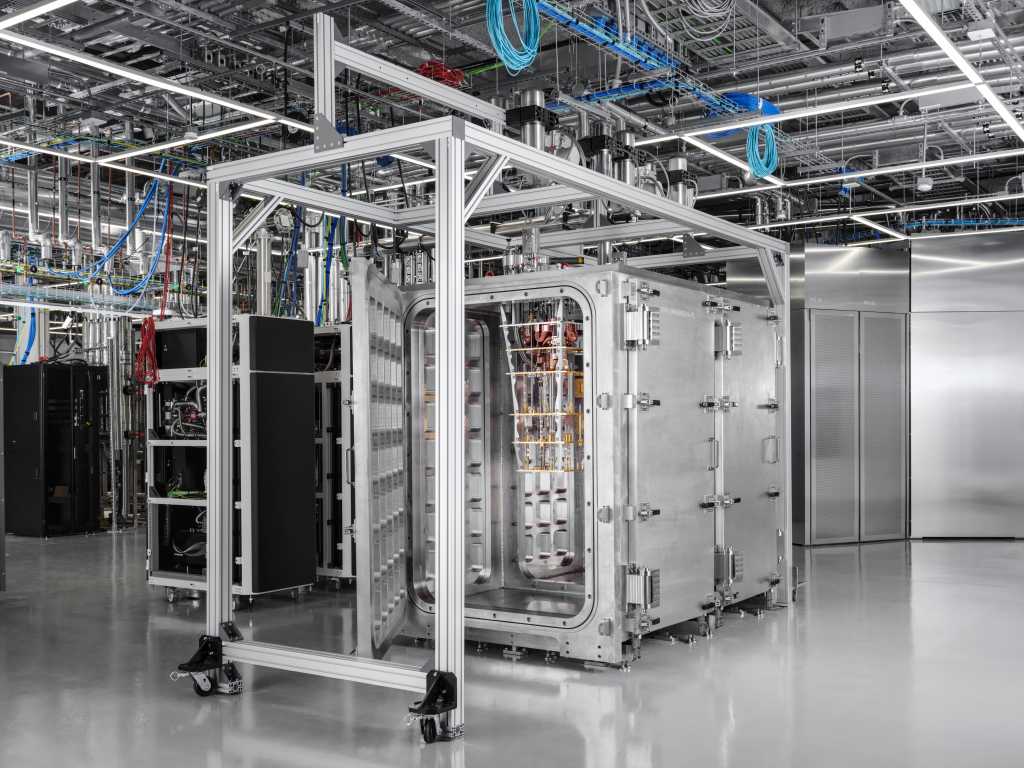
As it pursues its goal of producing a fault-tolerant quantum computer, IBM today announced that it has achieved another milestone: It has successfully joined two cryogenic modules to create a single environment designed, it said, “to scale into the modular, shared, and ultra-cold system required to link hundreds of quantum chips into a more powerful quantum computer.”
The company plans to deliver the fault-tolerant IBM Quantum Starling system, capable of running circuits composed of 100 million quantum gates on 200 logical qubits, in 2029. It is investing $10 billion to create and commercialize the necessary technology.
The pair of cryogenic modules together stand more than 8 feet tall and is 8 feet wide, and testing showed that they can cool to 4 degrees Kelvin (-452.5 Fahrenheit), about the temperature of liquid helium, in under five days, and can achieve an even more frigid final temperature of below 15 millikelvin (-459.6 Fahrenheit) shortly thereafter.
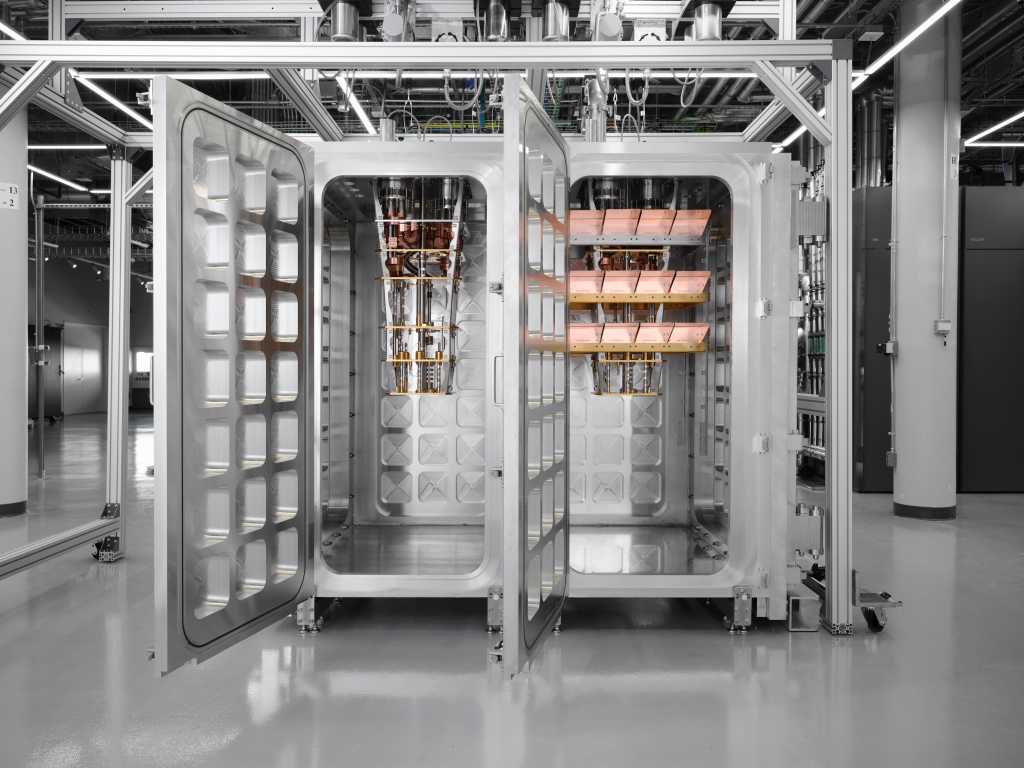
The modules’ boxy shape lets them connect in a tight row and directly link quantum processors with IBM’s L-coupler technology, which connects separate chips and lets them function as a single processor.
Once the modules have been assembled and tested, they can be separated for shipping then put together on the client site to build an “arbitrarily large” system, IBM said.
The dilution refrigerator, rather than being cylindrical, is rectangular, leaving more room for wiring and other components.
IBM
“This is our first shared ultra cold environment that allows multiple chips within to be connected together, and it really provides enough space for all the high-density wiring that’s needed,” explained IBM Fellow Jerry Chow, CTO, quantum-centric supercomputing, during a media briefing. “So we’re really starting to architect the entire system towards one unified powerful system.”
Oliver Dial, IBM Fellow and VP of quantum systems, added, “one of the great things about this modular design is it lets us co-optimize the volume that’s inside, the amount of space that we have for wiring, and the amount of cooling power we have. This has about 12 times more area for wiring than Quantum System One. We really need that to be able to install the super complicated, sophisticated quantum processors of the future.”
The importance of the box-shaped design, he noted, is that when adding modules, it minimizes the distance that L couplers need to go from processor to processor.
IBM’s quantum roadmap includes plans to use L-couplers to link multiple processors into a larger quantum computer with at least 1,000 programmable qubits which can directly use to perform computations by 2027. Later this year, it will install IBM Quantum Nighthawk processors into the cryogenic modules as part of its performance testing.
“Bringing fault-tolerant quantum computers to industries depends on several fundamental advances,” said Jay Gambetta, director of IBM Research and IBM Fellow, in a statement. “The successful connection and operation of these cryogenic modules signals a leap forward in that direction and will accelerate our progress alongside continued innovation in quantum hardware, software, and algorithms.”