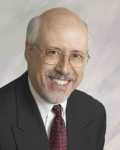
Another trip down wireless memory lane, this time hosted by one of the true pioneers in deploying wireless LANs. Highly recommended!
I first spoke with Alex Hills back in the very early 1990s, when he was building the first campus-scale WaveLAN installation ever, at Carnegie Mellon University (CMU). I was looking for a genuine customer to report on such a deployment, both of which were very few and very far between back then. I was thrilled to have the opportunity to speak with him then, and I recently had the opportunity to do so once again. Apart from his skills as conversationalist, Dr. Hills has now written a book, Wi-Fi and the Bad Boys of Radio, that supplies an engaging look at a key moment (and, in fact, beyond) in the history of wireless. Dr. Hills is also an engineer, and the former CIO at CMU, so there’s a little technology here, but that’s delightfully mixed with personal anecdotes, an interesting cast of characters, and, again, some history we really don’t want to lose.
Dr. Hills is a radio nerd. Indeed, the first two chapters of the book – about a third of the total volume, are a deeply-personal history of how he first got exposed to the Bad Boys of Radio noted in the title. These Bad Boys, by the way, aren’t Silicon Valley outlaws or even human; they’re the essential natural artifacts of radio propagation like fading and interference, and they of course figure prominently in the rest of the story. If you want to get right to the part about WLANs, read page 46 and then skip to page 49. On the other hand, if you’re a radio nerd, the story in those first 48 pages will bring back memories of your own, I’m sure, just as they did for me. Building that first crystal set (I still have mine, and it still works). Building that first shortwave receiver (no luck there; mine is long gone now). Marveling at invisible airwaves crackling with life, as Geddy Lee sings, with these gaining in significance and vitality as new applications, like wireless LANs, begin to take hold. There’s an intrinsic magic in radio that often sends a chill down the spines of even non-nerds when they learn how miraculous electromagnetic wave propagation really is. On second thought, be sure to read those first 48 pages.
While I got my share of electric shocks experimenting with radio, I’m more of a networking nerd, and the rest of the book is about the evolution from radio, pure PHY, to wireless, the technology we depend upon today. This book at its core is the story of Wireless Andrew, the first campus-wide deployment of wireless LANs (at CMU) in the mid-1990s. This is before both 802.11 and Wi-Fi; the equipment used was AT&T (formerly NCR) WaveLAN gear, featuring clunky two-piece PCMCIA adapters, clunky (and expensive) APs, and a lot of work required to get – and keep – it all running. Dr. Hills explores the technologies involved in a friendly, almost non-technical fashion (think: Tracy Kidder’s Soul of a New Machine) that will appeal to a very broad audience. I know personally a number of the folks involved in all of this, and all are represented with authenticity and the affection they deserve. The story actually runs almost to today, and begins and essentially ends in, of all places, Alaska. It’s a fast read constructed by an author who clearly knows how to tell a story and who is clearly having the time of his life while so doing.
Anyone looking for insights into the history and indeed the culture of Wi-Fi will enjoy this book. It’s rare for a pioneer to document the pioneering – and especially in such an engaging fashion. Like I said, even non-nerds will find a few very pleasant hours in these pages.