With utilities quoting four‑to‑ten‑year wait times — and one offering a 12‑year study period — Google says grid constraints are becoming the defining limit on AI‑era data center growth.
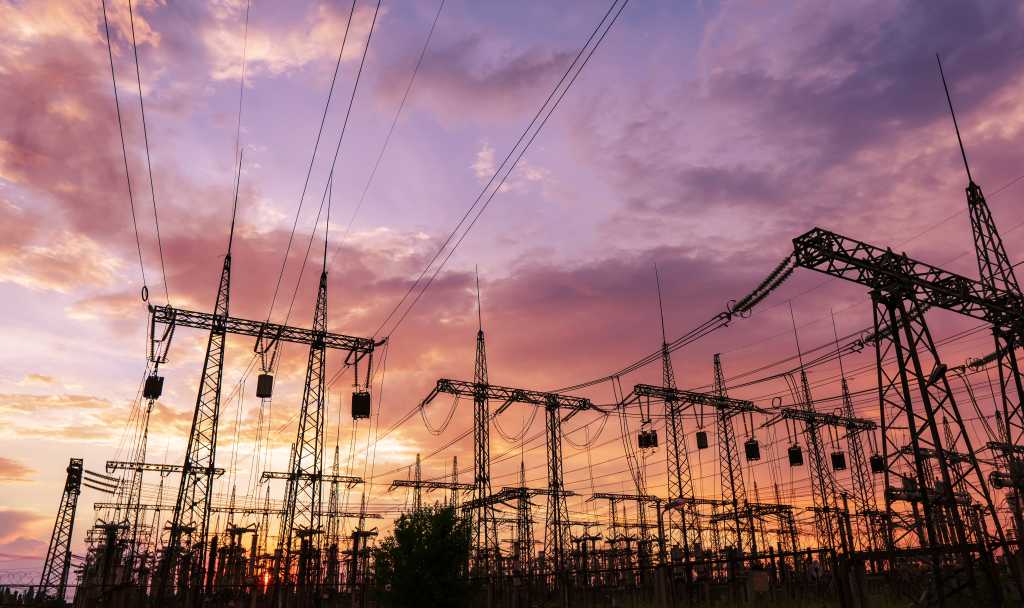
Google says transmission grid connection delays of up to 12 years have become the biggest obstacle to powering its data centers, highlighting an infrastructure crisis that threatens to constrain cloud capacity expansion as AI workloads surge.
Marsden Hanna, Google’s global head of sustainability and climate policy, said Wednesday that “transmission barriers are the number one challenge we’re seeing on the grid,” with utilities in many markets quoting four-to-ten-year connection timelines. One utility told Google it would take 12 years just to study an interconnection request.
“Transmission barriers are the number one challenge we’re seeing on the grid,” Hanna said at an American Enterprise Institute event. “We have utilities in many markets telling us four or five, sometimes ten years to interconnect. We have one utility that told us 12 years to study the interconnection timeline.”
The warning comes as data center electricity consumption is projected to climb from 176 terawatt-hours in 2023 to between 325 and 580 TWh by 2028, according to Lawrence Berkeley National Laboratory research released in December. That growth is colliding with a power grid struggling to accommodate new connections, with nearly 2,300 gigawatts of generation and storage capacity now waiting in interconnection queues.
For CIOs planning cloud infrastructure, the grid crisis represents a fundamental shift in capacity assumptions. “CIOs need to confront a reality that the cloud isn’t limitless anymore,” said Sanchit Vir Gogia, chief analyst at Greyhound Research. “The bottleneck isn’t silicon or software — it’s electricity.”
Systemic delays worsen across the grid
The delays Google faces reflect broader systemic problems. Interconnection wait times have doubled from under two years for projects built in 2000-2007 to over four years for those built in 2018-2024, according to Berkeley Lab data. Only 13% of capacity requesting interconnection from 2000-2019 had reached commercial operation by the end of 2024.
The delays stem from aging transmission infrastructure unable to handle concentrated power demands. Building regional transmission lines currently takes seven to eleven years just for permitting, Hanna told the gathering. Southwest Power Pool has projected 115 days of potential loss of load if transmission infrastructure isn’t built to match demand growth, he added.
These systemic delays are forcing enterprises to reconsider fundamental assumptions about cloud capacity. Regions including Northern Virginia and Santa Clara that were prime locations for hyperscale builds are running out of power capacity.
The infrastructure constraints are also reshaping cloud competition around power access rather than technical capabilities. “This is no longer about who gets to market with the most GPU instances,” Gogia said. “It’s about who gets to the grid first.”
Co-location emerges as a faster alternative to grid delays
Unable to wait years for traditional grid connections, hyperscalers are pursuing co-location arrangements that place data centers directly adjacent to power plants, bypassing the transmission system entirely. Pricing for these arrangements has jumped 20% in power-constrained markets as demand outstrips availability, with costs flowing through to cloud customers via regional pricing differences, Gogia said.
Google is exploring such arrangements, though Hanna said the company’s “strong preference is grid-connected load.” “This is a speed to power play for us,” he said, noting Google wants facilities to remain “front of the meter” to serve the broader grid rather than operating as isolated power sources.
Other hyperscalers are negotiating directly with utilities, acquiring land near power plants, and exploring ownership stakes in power infrastructure from batteries to small modular nuclear reactors, Hanna said.
But co-location introduces new reliability concerns. When a data center draws power from a single generation source in an off-grid configuration, traditional redundancy assumptions change, Gogia said. “Traditional cloud regions are backed by dual utility feeds, redundant substations, and the ability to draw fallback power across the network. Colocated sites, by contrast, often operate as islands.”
Systemic fixes needed beyond workarounds
While co-location offers a tactical response to grid delays, addressing the fundamental transmission capacity shortage requires broader policy intervention. Federal regulators issued an order in 2023 to reform interconnection procedures, replacing serial queues with a “first-ready, first-served” cluster model requiring stricter site control and higher deposits. But implementation remains incomplete and does little to address the underlying capacity constraints.
The Department of Energy estimates up to 100 gigawatts of capacity could be unlocked through advanced transmission technologies, but deploying those solutions requires regulatory changes to incentivize utility adoption. Goldman Sachs Research estimates that about $720 billion in grid spending through 2030 may be needed to support data center expansion.
“When choosing a provider or region, you’re not just picking based on technical fit—you’re betting on whether that provider has the power rights to support your workloads over the next five years,” Gogia said. “And in today’s market, that’s a bet you want to place with your eyes wide open.”