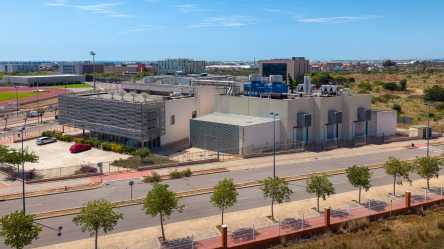
China’s LineShine system debuts atop the TOP500 rankings, becoming the fifth exascale supercomputer and ending U.S.-based El Capitan’s run at No. 1.

China has reclaimed the top spot in the global supercomputing race.
The debut of China’s LineShine on the 67th edition of the TOP500 rankings ends El Capitan’s run at the top the list and marks the first time a China-based system has led the rankings since Sunway TaihuLight in 2017.
Installed at the National Supercomputing Centre in Shenzhen and built by Shenzhen Cloud Computing Center, LineShine achieved 2.198 exaflops on the High Performance Linpack (HPL) benchmark, putting it more than 20% ahead of the No. 2-ranked El Capitan system at Lawrence Livermore National Laboratory.
The latest rankings also mean there are now five exascale systems operating globally, with LineShine joining El Capitan, Frontier, Aurora, and Europe’s JUPITER Booster in an increasingly crowded upper tier. While the U.S. systems dominating the upper echelon rely heavily on accelerators from AMD and Intel, LineShine reached the top spot with a domestic CPU-only design built around China’s LingKun platform, proprietary LingQi interconnect, and Kylin operating system.
The most recent rankings also reshuffled the top 10. Italy’s HPC7 debuted at No. 6, giving energy giant Eni two systems among the world’s 10 fastest supercomputers, while Finland’s LUMI and Italy’s Leonardo fell out of the top 10. Microsoft’s Eagle remained in the top 10, reflecting the growing influence of hyperscale cloud providers in high-performance computing.
Performance across the entire TOP500 also continued to climb rapidly. Combined computing power reached 18.74 exaflops, up from 14.99 exaflops six months ago, while accelerator adoption rose to 277 systems, up from 255 in the previous edition.
Here’s a look at the top 10 systems on the June 2026 TOP500 list.
1. LineShine (China)
- Location: National Supercomputing Centre in Shenzhen (NSCS), China
- HPL score: 2.198 exaflops
- System model: LingKun platform
- Compute architecture: LX2 304-core 1.55GHz processors
- Total core count: 13,789,440
- Interconnect: LingQi
2. El Capitan (U.S.)
- Location: Lawrence Livermore National Laboratory, California
- HPL score: 1.809 exaflops
- System model: HPE Cray EX255a
- Compute architecture: AMD 4th Gen EPYC 24-core 1.8GHz processors and AMD Instinct MI300A accelerators
- Total core count: 11,340,000
- Interconnect: Cray Slingshot-11
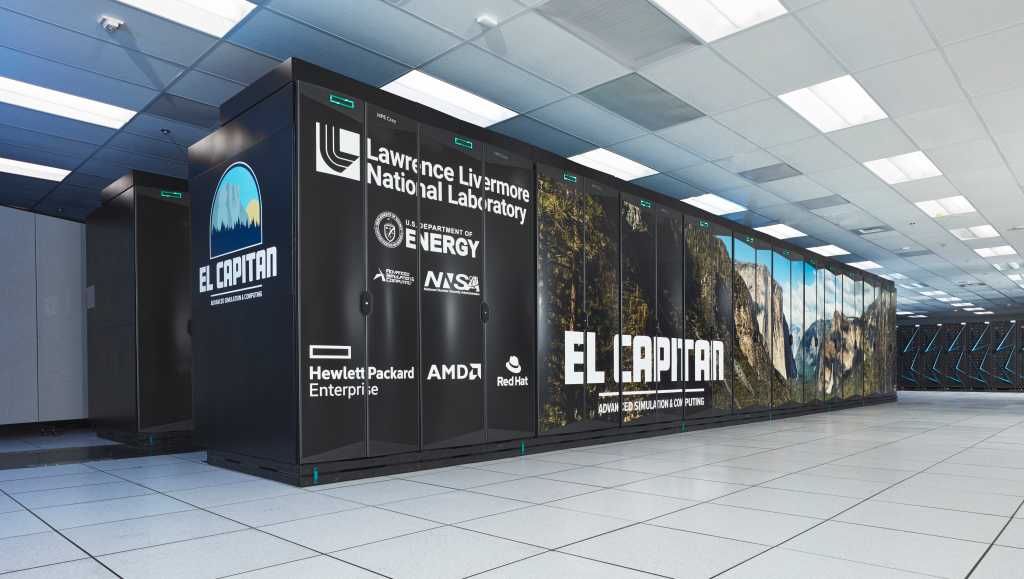
Lawrence Livermore National Laboratory
3. Frontier (U.S.)
- Location: Oak Ridge National Laboratory, Tennessee
- HPL score: 1.353 exaflops
- System model: HPE Cray EX235a
- Compute architecture: AMD Optimized 3rd Gen EPYC 64-core 2GHz processors and AMD Instinct MI250X accelerators
- Total core count: 9,066,176
- Interconnect: Cray Slingshot-11
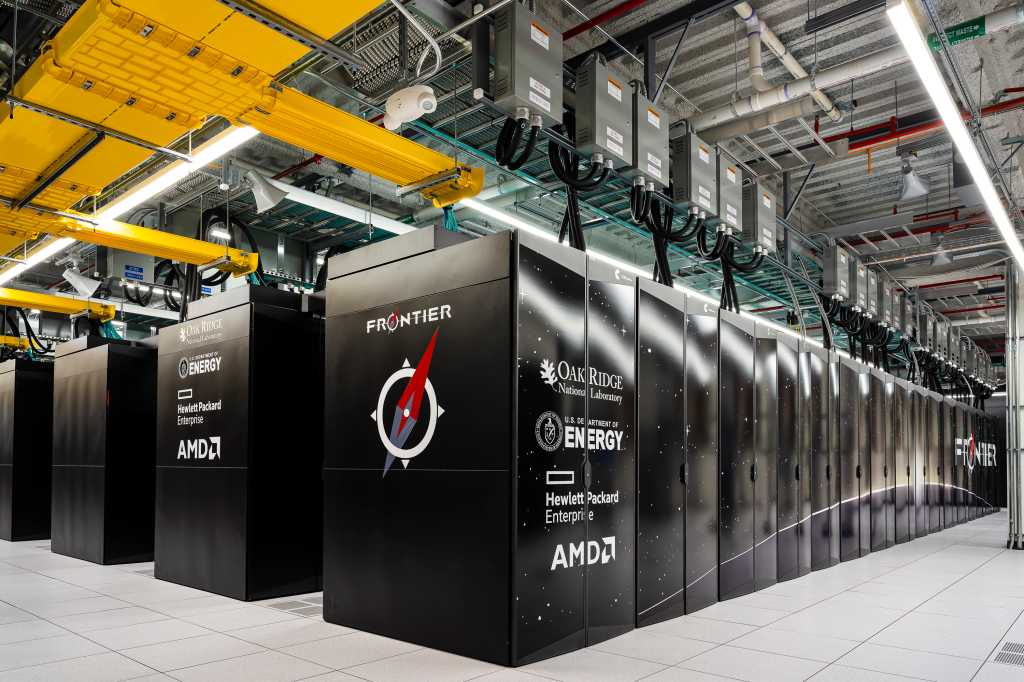
Carlos Jones/ORNL, U.S. Dept. of Energy
4. Aurora (U.S.)
- Location: Argonne Leadership Computing Facility, Illinois
- HPL score: 1.012 exaflops
- System model: HPE Cray EX – Intel Exascale Compute Blade
- Compute architecture: Intel Xeon CPU Max Series processors and Intel Data Center GPU Max Series accelerators
- Total core count: 9,264,128
- Interconnect: Cray Slingshot-11
5. JUPITER Booster (Germany)
- Location: Jülich Supercomputing Centre, Germany
- HPL score: 1.000 exaflops
- System model: BullSequana XH3000
- Compute architecture: GH Superchip 72C 3GHz
- Total core count: 4,801,344
- Interconnect: Quad-Rail NVIDIA InfiniBand NDR200
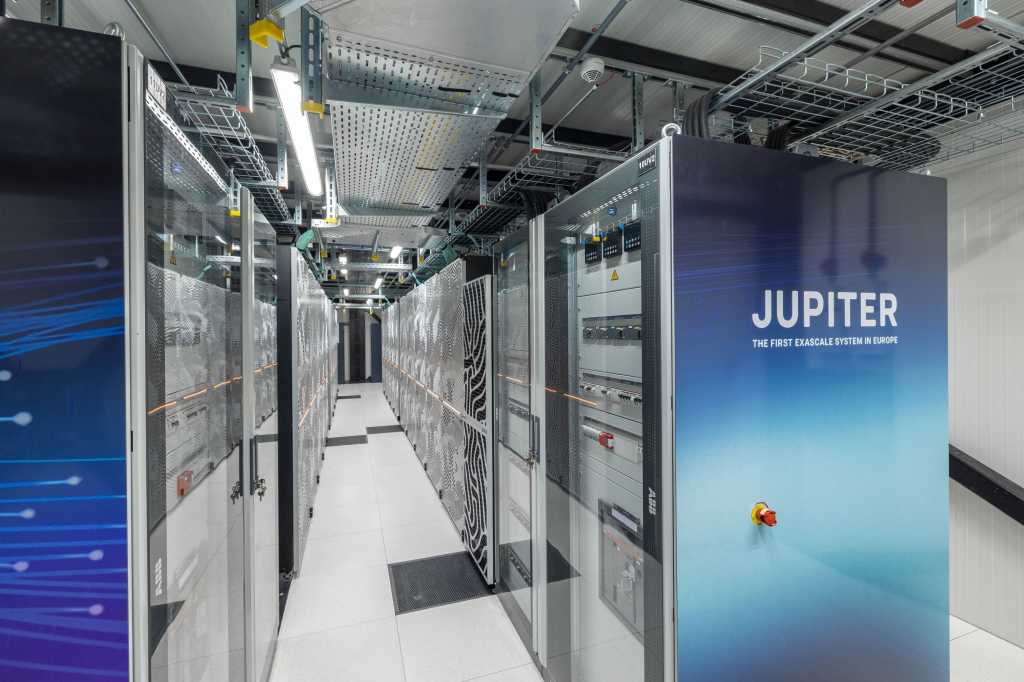
Copyright: Forschungszentrum Jülich / Sascha Kreklau
6. HPC7 (Italy)
- Location: Eni S.p.A., Italy
- HPL score: 571.5 petaflops
- System model: HPE Cray EX255a
- Compute architecture: AMD 4th Gen EPYC 24-core 1.8GHz processors and AMD Instinct MI300A accelerators
- Total core count: 3,461,472
- Interconnect: Cray Slingshot-11
7. Eagle (U.S.)
- Location: Microsoft Azure cloud infrastructure
- HPL score: 561.2 petaflops
- System model: Microsoft NDv5
- Compute architecture: Intel Xeon Platinum 8480C 48-core 2GHz processors and NVIDIA H100 accelerators
- Total core count: 2,073,600
- Interconnect: NVIDIA InfiniBand NDR
8. HPC6 (Italy)
- Location: Eni S.p.A., Ferrera Erbognone, Italy
- HPL score: 477.9 petaflops
- System model: HPE Cray EX235a
- Compute architecture: AMD Optimized 3rd Gen EPYC 64-core 2GHz processors and AMD Instinct MI250X accelerators
- Total core count: 3,143,520
- Interconnect: Cray Slingshot-11
9. Fugaku (Japan)
- Location: RIKEN Center for Computational Science, Kobe, Japan
- HPL score: 442.0 petaflops
- System model: Fugaku
- Compute architecture: Fujitsu A64FX 48-core 2.2GHz processors
- Total core count: 7,630,848
- Interconnect: Tofu Interconnect D
10. Alps (Switzerland)
- Location: Swiss National Supercomputing Centre (CSCS), Switzerland
- HPL score: 434.9 petaflops
- System model: HPE Cray EX254n
- Compute architecture: NVIDIA Grace 72C 3.1GHz, NVIDIA GH200 Superchip
- Total core count: 2,121,600
- Interconnect: Cray Slingshot-11