Dell says new features are designed to turn fragmented enterprise data into trusted context for generative and agentic AI.

Dell Technologies is expanding its Dell AI Data Platform with a set of capabilities designed to give enterprise AI agents a more complete view of corporate data, while accelerating the preparation of that data for AI workloads. The new capabilities are part of Dell’s broader AI Data Platform, which serves as the data foundation of its Dell AI Factory strategy.
The company is adding three new features: a Unified Semantic Layer, Enterprise Knowledge Graph, and Knowledge Agents. The additions are a way to turn scattered enterprise information into trusted, reusable context for generative and agentic AI applications.
The move reflects a growing problem for enterprises deploying AI agents: giving an AI system access to data does not necessarily mean the system understands what that data means or how different pieces of information relate to each other, according to Dell.
As Dell explains it, the model isn’t the bottleneck to achieving enterprise scale for AI in most cases. The data is. A company’s most useful information sits in files, databases, cloud services and systems across multiple locations.
Most of it was created long before an AI agent expected to read it. It was never labeled, connected, or organized with a machine reader in mind. As a result, agents burn tokens reconstructing answers that should already exist. Every query means more steps, more computing, more cost and slower, less trustworthy results.
“Data without context is just noise,” said Arthur Lewis, president of Dell’s Infrastructure Solutions Group in a statement. “Most enterprises have spent years making their data accessible. That’s not the same as making it usable.”
The Unified Semantic Layer establishes a common business vocabulary across structured and unstructured data. Dell also plans to incorporate Nvidia’s open-source Auto-Ontology technology, which can help construct knowledge graphs from enterprise data.
The Enterprise Knowledge Graph goes a step further by mapping relationships between data, including metadata, lineage, query history and other information. Dell says this lets an AI agent identify related information across tables, data products, multimodal data and vector indexes.
The third component, Knowledge Agents, is designed to apply that context to specific business tasks. Customers can define what information an agent can access, what rules it must follow, what quality standards it must meet and how much compute or other resources it can consume. Nvidia Nemotron Retriever models will provide document retrieval, reasoning. and visual understanding capabilities for the agents.
Dell says the new semantic layer, knowledge graph and agents will operate within the customer’s environment, a move designed to address data sovereignty and security requirements. The company also says the architecture is designed to avoid locking customers into a particular AI model, data platform, or storage provider.
The company is also introducing enhancements to PowerScale focused on security and multitenancy, along with the Dell Storage Performance Tool and AI-ready data services.
Dell is also adding Nvidia-accelerated processing to its data pipeline. Dell’s Data Processing Engine is being integrated with Nvidia cuDF, while Apache Arrow is being used to improve data movement between storage and processing.
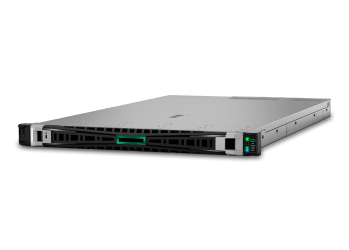
Dell says internal testing showed GPU-accelerated processing on a PowerEdge R770 system with Nvidia RTX PRO 4500 Blackwell Server Edition GPUs was 3.9 times faster on average than CPU-only processing, with a peak improvement of 20.4 times on a batch data-mining workload.
Dell plans to release the Unified Semantic Layer, Enterprise Knowledge Graph and Knowledge Agents in the first half of 2027. Data Processing Engine enhancements using Nvidia acceleration are scheduled for December 2026, with additional Apache Arrow acceleration planned for the first half of 2027. PowerScale security and multitenancy enhancements are expected in November.