Data centers consume millions of gallons of fresh water that often cannot be spared.
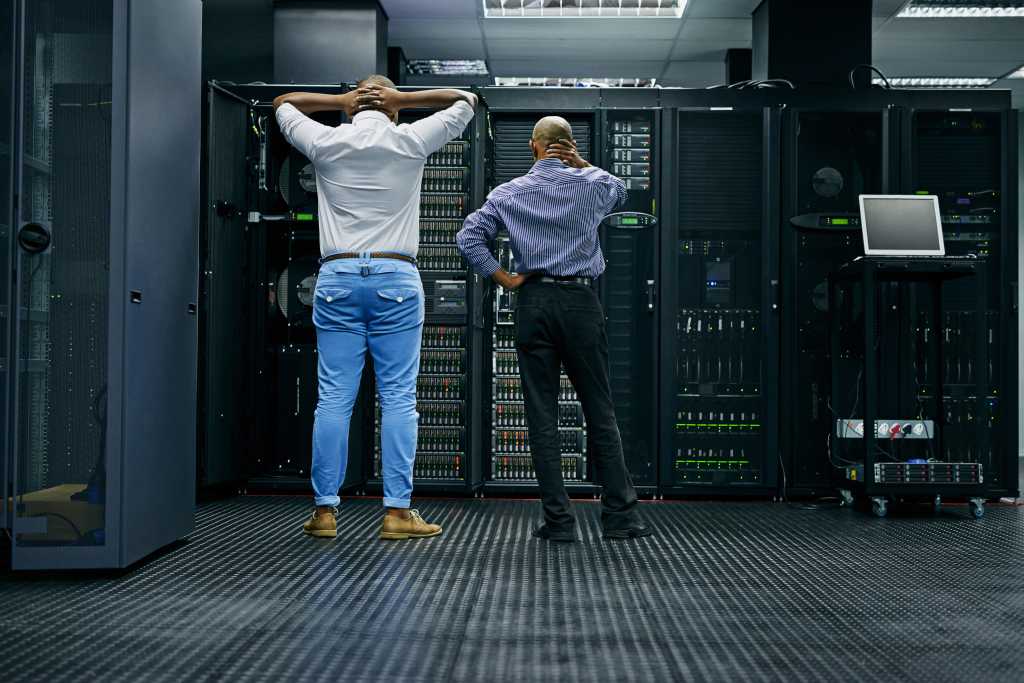
Data centers are increasingly running into local opposition, for a variety of reasons. The two most-cited complaints are power consumption driving up electricity rates, and noise from the generators disrupting surrounding neighborhoods.
Another factor that’s driving residents to push back against data center projects is water consumption. According to the International Energy Agency (IEA), a typical 100-megawatt hyperscale data center consumes around 530,000 gallons of water per day, which is equivalent to the water use of 6,500 homes.
And it has to be fresh water, not ocean water. Given the drought conditions in many western states, people and municipalities alike are not keen on a mega data center consuming all of the drinkable water.
Traditional data center cooling is similar to the model of human perspiration. We perspire when overheated, and that water cools us as it evaporates from our skin. A common method of cooling is latent heat evaporation, where water is evaporated and as it dries, it cools, says Matt Green, president of HVAC solutions provider Brucker.
“The reason why we evaporate water is because it’s a very effective way to cool. And in normal comfort, cooling office buildings, things like that, the amount of water consumption we deal with is tolerable,” he said. But when you start building data centers, which are basically power plants in reverse, the amount of heat generated requires substantially more water than would normally be used for a given building of the same footprint, Green said.
Another legacy cooling technology in data centers is what’s called a cooling tower. A cooling tower sits outside of the main building, and the water cascades down the towers like a waterfall. However, the tower is open to the atmosphere to let natural cooling in. The churn of the water dissipates the heat, but there is significant evaporation in the process.
“It evaporates a lot. I mean, we’re talking many, many Olympic swimming pools worth of water on a daily basis in some of these data centers,” said Green. “Some of the hyperscalers I work with are still using open cooling tower solutions, even today.”
There were other reasons for using evaporation. For starters, evaporation equipment takes up a lot less space the chilled water equipment. Secondly is the price. Chilled water-cooling costs about 10% to 15% more than equivalent evaporation technology.
But that is changing, Green notes, as more and more societal pressure, economic pressure around water consumption continues to move to the forefront, data centers are being forced to adapt.
“We’re in a market now where we can use air cooled chillers that don’t evaporate water like a water-cooled chiller does, and have a very, very similar level of overall system efficiency,” he said.
We are also seeing the advent of closed loop technology, where liquid is pumped into a system to absorb heat and then pumped out to be cooled and recirculated, much like a car radiator. Gamers have been on the forefront of liquid cooling and closed loop with all-in-one coolers for gaming PCs becoming standard issue now.
And change is coming to the data center as well. Green says he’s seeing technologies like ultra-high efficiency air cooled chillers replace the ultra-efficient water-cooled plants that were being built.
The industry is also seeing another technology called hybrid heat rejection that uses water only on the hottest, most humid days, and then can run and operate just like your radiator when it’s cooler outside.
Most enterprises get along just fine with a computer room air conditioner (CRAC) or a computer room air handler (CRAH). Those have varying water consumption associated with them, too.
“Sometimes we see water-cooled but more often, we just see straight air-cooled computer room air conditioners,” said Green. Enterprise data centers can stick with air cooling for now because “the densities aren’t high enough for them. They can still cool it with air for what we’re seeing today.”
But many of these data centers are anticipating higher server loads, and they’re building out infrastructure to be prepared for the future. “I see that more on the CoLo side, less on the enterprise side, there’s their densities are still far too low to need to go to direct to chip cooling,” said Green.