
Chasing down asteroids, comets becoming more of a NASA priority
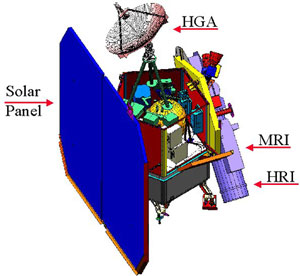
Recently NASA said it adjusted the trajectory of its Deep Impact/Epoxi spacecraft to get it into a better position to snap shots of the comet Hartley 2 on Nov. 4.
NASA said the satellite fired its engines for 11.3 seconds on May 28. While the burn changed the spacecraft’s velocity by less than a quarter mile per hour, that was all the mission’s navigators requested to set the stage for an Earth gravity assist on June 27, NASA stated.
The hottest images of cool outer space
Epoxi is an extended mission of the NASA’s Deep Impact spacecraft. Its name is derived from its two tasked science investigations — the Deep Impact Extended Investigation (DIXI) and the Extrasolar Planet Observation and Characterization (EPOCh).
Earlier this year NASA fired the rockets to slow down its Stardust satellite to ultimately let it snap better pictures of the Tempel 1 comet it will pass by next year.
NASA said Stardust-NeXT fired its engines for 22 minutes 53 seconds on Feb. 17 to purposely delay its arrival at comet Tempel 1 by 8 hours 21 minutes, altering the spacecraft’s speed by 54 miles per hour. The spacecraft’s velocity relative to the sun is 47,500 mph, NASA said.
The Lockheed Martin-built spacecraft will still fly by the comet on Feb. 14, 2011, Valentines’ Day but hopefully the delay will let the satellite get better high-resolution images of the comet.
NASA said that’s important because the comet rotates, allowing different regions of the comet to be illuminated by the sun’s rays at different times. Mission scientists want to maximize the probability that areas of interest previously photographed by NASA’s Deep Impact Deep Impact mission in 2005 will also be covered by the sun’s rays and visible to Stardust’s camera when it passes by.
There are other satellites tracking down comets and asteroids as well. Probably the most well-known is the European Space Agency’s Rosetta comet chaser.
ESA’s Rosetta is designed to explore comets at close range. It is made up of a large orbiter, which is designed to operate for a decade at large distances from the Sun, and a small lander. Each of these carries a large complement of scientific experiments designed to complete the most detailed study of a comet ever attempted.
After entering orbit around Comet 67P/Churyumov-Gerasimenko in 2014, the spacecraft will release a small lander onto the comet’s icy nucleus, then spend the next two years orbiting the comet as it heads towards the Sun. On the way to Comet Churyumov-Gerasimenko, Rosetta will receive gravity assists from Earth and Mars, the ESA states.
Follow Michael Cooney on Twitter: nwwlayer8
Layer 8 Extra
Check out these other hot stories:
Could a roly-poly, wind-powered rover soon zip across Mars?
Satellite gap fuels climate, weather monitoring worry
FTC shoves identity theft rules deadline to year-end
FAA awards largest contracts ever — $4.4B — for future air traffic network
NASA satellites watch comet death dive into the Sun
NASA Mars Lander Phoenix killed by ice
NASA preps advanced technology for the future, now
Air Force sets date to fly Mach-6 scramjet
FTC greenlights Google-AdMob deal
FTC takes out notorious porn- and botnet-spewing ISP
US looking to quash malicious insider threats