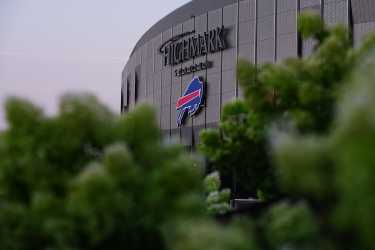
The Buffalo Bills eliminated fragmented legacy systems, streamlined IT operations, and transformed the game-day fan experience at Highmark Stadium.
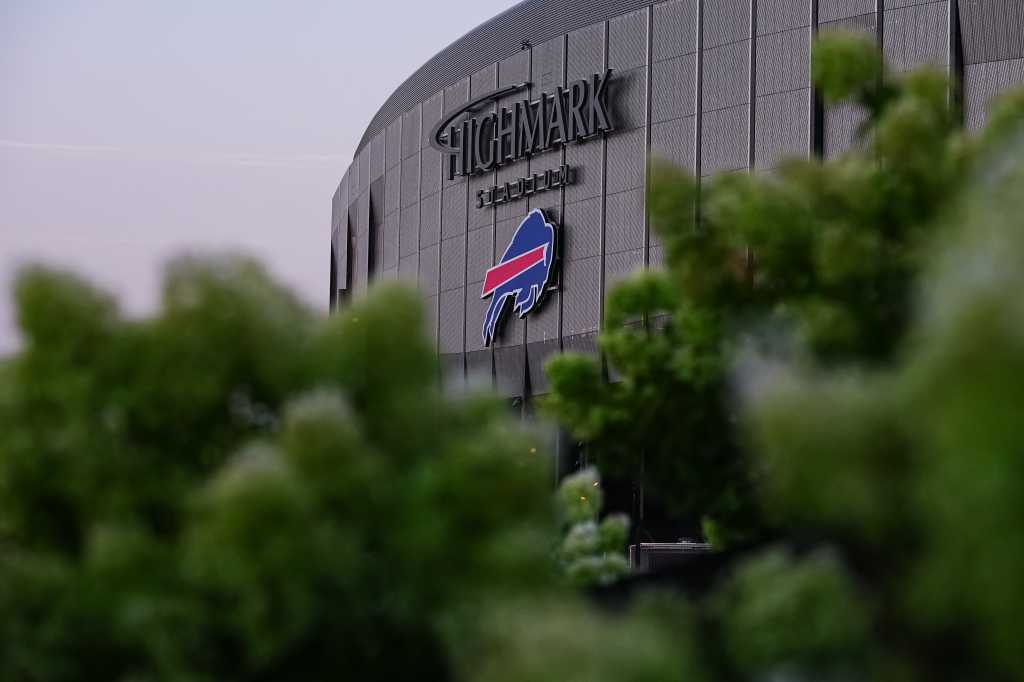
When the Buffalo Bills opened their new home, Highmark Stadium, for their first regular-season game against the Detroit Lions, most fans noticed the new seats, sightlines, and sound. What they won’t see is the biggest change: an entire venue running on a single converged network rather than a patchwork of vendor-specific systems.
That shift, built with Cisco as the stadium’s primary technology partner, offers an excellent case study for IT leaders well beyond professional sports. The Bills essentially rebuilt their digital foundation from scratch rather than layering new capabilities onto old infrastructure — and the operational and fan-experience gains have been immediate.
From fragmented systems to a single pane of glass
Shaun Handley, IT infrastructure project director for the Bills and a 22-year veteran of the organization, said the old stadium ran on a multi-vendor patchwork: separate Wi-Fi, separate core infrastructure, and everything else. That wasn’t necessarily hurting the fan experience directly, he said, but it was a constant drain on a lean IT staff.
“I really wanted to have robust infrastructure capable of supporting us into the future,” Handley said, describing the goal for the new build. “Developing something that’s going to be that single pane of glass, so I’m not jumping between multiple vendors — it just makes everything that much more efficient when we’re working, especially on a game day when we have 60,000 people in here.”
That single-vendor discipline extended to outside partners. Handley said several ecosystem vendors wanted to bring in their own gear rather than integrate with the Cisco environment. The Bills said no. “We wanted to stay within that Cisco ecosystem,” he said, so the IT team could manage and service everything under one scope instead of “mixing and matching” hardware it didn’t control.
The Wi-Fi numbers tell the story
Poor wireless service was among the top complaints from Bills fans about the old stadium — people couldn’t reliably make calls or send texts, let alone stream. I’ve toured dozens of professional and college stadiums, and poor Wi-Fi is very common. The new stadium runs on Cisco Wi-Fi 7, delivered through DB10 antennas mounted in the stadium’s canopy. This design covers the 300 and 400 levels and reaches down into the lower bowl, cutting the number of under-seat access points to just 20 rows. The result is roughly 1,300 access points covering about 64% of the venue — fewer physical APs than a traditional buildout while covering more square footage.
The usage data is the clearest proof point for the quality of the upgraded system. During a 2025 preseason game at the old stadium, fans consumed about 840 gigabytes of Wi-Fi data. During the 2026 preseason opener at Highmark Stadium, that number reached 16 terabytes — roughly 19 times higher. “Nobody’s been saying anything other than how amazing our Wi-Fi has been,” Handley said.
The need for high-performance Wi-Fi across the stadium has never been more important. Old-school design covered only the seating area, since players do not need Wi-Fi on the field. However, venues such as Highmark host concerts and other events where customers and fans are on the field. Those seats are premium-priced, and fans should expect reliable connectivity. Connectivity also needs to extend outside for pop-up merchandise kiosks and for fans to hail rideshare and other activities.
Broadcast, security, and AI ride the same network
The convergence extends well beyond fan Wi-Fi. Broadcast operations now run on the SMPTE 2110 standard over Cisco’s IP Fabric for Media, a watershed moment for the industry that brings production onto the same IP infrastructure as everything else. Handley called the move “very, very beneficial.”
Cisco Vision Edge drives digital signage across the venue, Webex Calling handles staff communications, and Cisco Spaces feeds location-based analytics into Splunk to provide insight into crowd flow and fan behavior. The Bills have also begun testing Cisco’s AI IQ tool alongside Catalyst Center to flag potential network issues before they become outages — an early step toward predictive network operations. Perimeter security runs on Cisco Secure Firewall, though Handley said more advanced threat-defense tools remain on the roadmap. The data-center layer runs on Cisco UCS, integrated with Nutanix in a hyperconverged design built to scale as the venue’s technology footprint grows.
The most underrated decision: Build IT before the walls go up
Perhaps the smartest architectural choice wasn’t a product at all but sequencing. The Bills built a dedicated, roughly 18,000-square-foot technology center outside the stadium bowl, with about 9,000 square feet for the distributed antenna system and the rest housing video production, common-carrier rooms, and the core 2110 broadcast infrastructure, all linked to the stadium by high-capacity fiber. Because that infrastructure sat in its own building rather than inside the stadium shell, the Bills were able to begin standing up IDFs, switches, and network cameras roughly eight months before the stadium’s completion — before some walls were even enclosed and before the bad weather hit the area. That meant the IT team wasn’t scrambling to finish the network buildout in the final days before opening, a common failure mode in large venue and facility projects.
Lessons for IT leaders across other industries
Few enterprises will build a stadium, but the underlying decisions translate directly.
- Consolidate around an operable platform, not just fewer vendors. The payoff of convergence is a smaller team’s ability to see and fix problems quickly. Of course, not all “single vendors” are the same, so ensure management-plane integration, not just brand consistency.
- Set clear rules for partner and vendor equipment. Letting every specialized vendor bring its own network creates blind spots and accountability gaps exactly when you need answers most urgently.
- Treat connectivity as a measurable experience, not a checkbox. The Bills tracked actual usage — from gigabytes to terabytes — as the true signal of success, not just coverage maps.
- Get IT involved in construction planning on day one. Building network infrastructure in parallel with, rather than after, physical construction eliminates the last-minute scramble that plagues most large facility projects.
- Let converged data unlock new operational value. Location analytics, network telemetry, and AI-assisted monitoring only work once fragmented systems are unified enough to feed a common data layer.
Highmark Stadium won’t solve Buffalo’s bid for a Super Bowl, Handley noted, because that depends on hotel capacity and weather, not network capacity. But it does show what happens when an organization treats its network as core infrastructure rather than an afterthought: fewer outages, faster troubleshooting, better data, and, for 60,000 fans on a Thursday night, Wi-Fi that finally works.