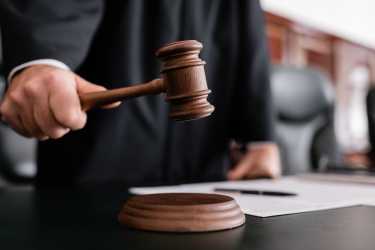
I recently had the unpleasant duty of reporting one of my undergraduate students to the Norwich University Academic Integrity Committee (AIC) for suspected academic dishonesty. In this report, without compromising the student’s identity (something forbidden by the Family Educational Rights and Privacy Act or FERPA), I want to show academic readers the investigative procedure that resulted in conviction of the student by the AIC and a resulting grade of F on his entire course.
The first clue that there was something wrong was the gut-level sense that the writing I received in the final draft of the student’s term paper on April 28, 2010 was not his own. I went back to his first draft and his second draft and reread his responses to quizzes and the mid-term exam; not one of these documents resembled the final paper in style. The earlier work was riddled with grammatical errors, sentence fragments, unclear assertions, and disorganized presentation of a mishmash of apparently undigested information. The final paper was well organized, well written, and exhaustively documented.
Another issue that struck me was that the last paragraph of the final version actually did resemble the original drafts – and it was printed in a point size (11) different from that of the rest of the paper (12).
Next, I examined the references in the paper. About 18 of them lacked specific page numbers or URLs, so I went to the Kreitzberg University Library and searched for them in the collection and in the electronic resources. No luck. The only references to them via search engines on the Web were to a few fragmentary extracts with only a few pages in Google Books. I asked the Reference Librarian to check whether anyone (not the specific names of borrowers) had received any of these missing texts using interlibrary loans; no one had in the period from January through May 2010.
One of the references was to a German-language text. In the bibliography, the student left the following note: “Unless you have begun reading in German, you might want to explain this.” That was, um, odd.
I also examined the metadata in the Word documents submitted by the students by using the free Metadata Analyzer from Smart PC Solutions. The tool showed inconclusive results; the author field for the first draft had the student’s former girlfriend (according to him, he wrote it on her computer); the author of the second draft was “profiletest” (which I was unable to tie to anything significant using a Google search) and the author of the third (final) draft was “image_add” (also inconclusive in a search).
During the AIC hearing, I asked the student for the specific pages and URLs for the incomplete references; he was unable to supply them, claiming he had not recorded any of these details. When asked the meaning of the phrase about explaining the German text, he could not respond coherently. Asked (in German) how he came to read such a large history book (it is 889 pages long according to the snippet in Google), he responded that he does not speak German. Well, I asked, how did you read the book to be able to reference it in your work? He said he read a translation (there is no such translation: I checked). He asked if I was aware of translation engines such as Google Translate; but, I asked, how could he have known which pages to translate if he doesn’t read German? He said he translated the entire book (although it is NOT available in its entirety online).
Other professors asked questions I had not thought about.
One perspicacious professor asked why the drafts were so different from the final version; the student said he worked for three weeks solid on the final version. Another professor asked why, in that case, he had submitted the second draft on April 25 and the final draft on April 28. Oh, said the student, he meant he spent three days on the work. Then a professor instructed the student as follows: “I am going to ask you a question and I want you to answer immediately, without delay or hesitation and without time to consult anything. Do you understand?” “Yes,” said the student. “What was Giordano Bruno accused of?” said the professor, naming a central figure discussed in the paper. There was a long pause, and the student asked in apparent puzzlement, “Bruno?” That was enough for the professor (and the rest of the Committee).
The AIC voted unanimously to rule against the student and I gave him an F grade for the course.
One of the most unfortunate features of a free market is that criminals use the free market for criminal activities. We may as well recognize the fact and respond by increasing the costs of their fraud through prosecution and punishment. I would like to see more states passing and enforcing legislation prosecuting firms which write term papers on contract. In addition, I would like schools and universities to launch civil torts against the students who submit such fraudulent work for recovery of damages to recompense faculty and staff for the waste of time incurred in investigating this kind of crap.
GRRRRR.