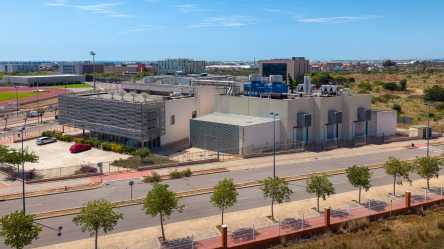
Nvidia says it rolled out a combined total of 4,500 exaflops of AI performance for scientific discovery.

Bragging rights are a staple in the Silicon Valley, and perhaps no one does it better than Nvidia. But its latest claim to fame is impressive.
At this week’s Supercomputing 25 conference in St. Louis, Nvidia announced that more than 80 new science-oriented systems powered by its platform have been deployed around the globe in the last year, at a combined total of 4,500 exaFLOPs of AI performance.
There are some notable standouts. First is Horizon at the Texas Advanced Computing Center (TACC) in Austin. When it is deployed next year, the system will offer 300 petaFLOPs of performance through Nvidia GB200 NVL4 and Vera CPU servers and interconnected with Quantum-X800 InfiniBand networking.
[ Related: More Nvidia news and insights ]
With 4,000 Blackwell GPUs, the Horizon supercomputer can deliver up to 80 exaflops of AI compute at FP4 precision. It is designed to support a specific set of scientific modeling and simulation applications, including disease simulation through molecular dynamics, modeling stars and galaxies across the universe, investigating novel materials at atomic scale, and mapping seismic waves to prepare for earthquakes.
Second is set of supercomputers at the Los Alamos National Laboratories (LANL) in New Mexico and at the Argonne National Laboratory (ANL) in Illinois. ANL will have two AI supercomputing systems, the big one is dubbed Solstice and will feature 100,000 Blackwell GPUs.
A system of that scale can reach an unheard-of speed of 1,000 exaFLOPs of AI training compute for training. That’s almost twice the speed of the sum of total of AI training compute across the entire TOP500 list from June 2025. Another ANL supercomputer, called Equinox, will be powered by a mere 10,000 Blackwell GPUs.
There will be three more Nvidia-accelerated systems at the lab — Minerva, Janus and Tara — will support AI inference and workforce development.
At LANL, there will be two new systems to be built and delivered by Hewlett Packard Enterprise called Mission and Vision systems. They will be powered by the Nvidia Vera Rubin platform and the Quantum-X800 InfiniBand networking platform. Mission will run classified applications for the National Nuclear Security Administration, while Vision will power open science research, including foundation models and agentic AI.
In Germany, the Jülich Supercomputing Centre’s JUPITER system has become Europe’s first exaflop system, which should put it in the top ten of the Top 500 list. JUPITER was just inaugurated in September and features 24,000 GH200 Grace Hopper Superchips interconnected with Nvidia’s Quantum-2 InfiniBand.
In Japan, RIKEN, Japan’s leading national research institute, has announced plans for two new supercomputers. Several years back, RIKEN’s Fugaku held the top spot on the Top 500 lists of supercomputers, built on custom Arm silicon. Now, RIKEN is building two more supercomputers, this time with Nvidia processors. One will be built for AI for science and the other for quantum computing.
The first system, for science computation, will deploy 1,600 Nvidia Blackwell GPUs, using the GB200 NVL4 platform and interconnected by Nvidia Quantum-X800 InfiniBand networking. The system will advance research in areas such as life sciences, materials science, climate and weather forecasting manufacturing and laboratory automations.
The second system, dedicated to quantum computing, will use 540 Blackwell GPUs also using the GB200 NVL4 platform and interconnected by Quantum-X800 InfiniBand networking and is designed to accelerate research in quantum algorithms, hybrid simulation and quantum-classical computing methods.
The two new RIKEN systems come on the heels of an announcement in August that Fujitsu and Nvidia were going to work together to codesign a successor to the Fugaku system, due in 2030 and codenamed FugakuNEXT. It will use a combination of Fujitsu’s MONAKA-X processor, a future Nvidia processor, and quantum technology.
Nvidia claims that FugakuNEXT will deliver 100x greater application performance compared with supercomputers based on CPUs or other existing systems when delivered in 2030 and will integrate production-level quantum computers in the future.
More Nvidia news:
- Nvidia highlights considerable science-based supercomputing efforts
- Nvidia’s first exascale system is the 4th fastest supercomputer in the world
- Nvidia touts next-gen quantum computing interconnects
- Next-generation HPE supercomputer offers a mix of Nvidia and AMD silicon
- Cisco, Nvidia strengthen AI ties with new data center switch, reference architectures
- Nvidia looks to power AI factory networks
- Should enterprise developers care about Nvidia?