Project goal is to create a standard power delivery system to while reducing operational expenses.
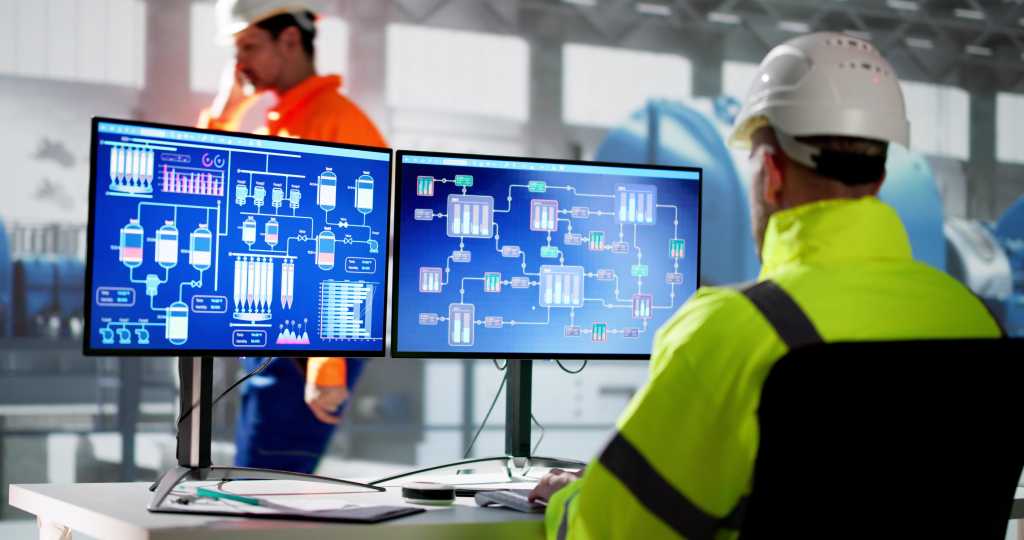
Google, Microsoft and Nvidia are working through the Open Compute Project (OCP) to establish 800-volt direct current (800VDC) as an open standard for powering the next generation of high-density AI data centers.
The three companies are collaborating with the broader OCP ecosystem on common requirements for 800VDC power distribution, including power conversion, power quality, system interfaces and safety.
The move is aimed at reducing infrastructure complexity as AI workloads drive power consumption sharply higher. GPUs in particular have an enormous power draw, an existing infrastructure can’t handle the amount of power needed.
The savings over alternating current (AC), the current power standard, are considerable. With AC, there are 4 wires while DC has two. So there is considerable wiring savings in an all-DC facility. Also, with higher voltage comes a lower current and current is what generates heat. So data centers that can run on 800VDC can run cooler.
That translates to a 50% to 80% reduction in copper usage and an 8% to 12% reduction in annual energy-related OpEx through lower conversion and distribution losses. AI-first facilities can see a $4 million to $8 million in CapEx savings per 10 MW build by reducing upstream AC. For a one-gigawatt data center, you’re saving a several million pounds of copper wire.
The push reflects a fundamental change in data-center power requirements. AI accelerators are being deployed in increasingly dense configurations, driving power consumption per rack higher and making traditional low-voltage AC distribution more difficult to scale.
OCP says higher-voltage DC can deliver the same amount of power at lower current, reducing the amount of copper and conductor infrastructure required. It also said the industry is converging on 800 VDC because it can move more power while reducing the conductor burden associated with lower-voltage systems.
Google, Microsoft and Nvidia began presenting their 800 VDC work through OCP in 2025. The effort has since moved beyond demonstrating technical feasibility toward establishing specifications that can be adopted throughout the data-center supply chain.
The companies have initiated an OCP workstream focused on converting medium-voltage AC power directly to 800 VDC. They are also aligning requirements covering power quality, power smoothing and end-to-end system interfaces.
The open approach could have significant implications for the data center supply chain. Instead of designing separate power systems for each major customer, power equipment manufacturers could build equipment using a common spec, just like servers.
This effort by Google, Microsoft, and Nvidia represents more than a change in voltage. It is an attempt to create a common electrical foundation for AI factories before increasingly dense systems force every hyperscaler and equipment supplier to develop its own solution.
One player is notably absent, and that is Amazon Web Services (AWS). It has made no commitment toward 800 VDC nor announced its own plans. It clearly has to make a move as power density increases and the current state of electricity usage continues to grow untenable. Just what they are doing is not clear although there are hints.
Amazon is aggressively redesigning its AI data centers for much higher-density systems. Its internal “Titus” initiative, for example, is reportedly focused on next-generation infrastructure capable of supporting NVIDIA GB200-class systems and future Vera Rubin hardware, while increasing data center capacity and improving power and cooling efficiency.